
Kardashev index
—
No reliable data yet

AccelerationFour-dimensional viewin 2 monthsLong-Horizon Agent Teams (speculative)Estimate
Scenario forecast (2027–2029): teams of AI agents may divide work, check each other and deliver continuously in software development and research. This assumes mature permissions, verification and failure recovery; humans remain accountable for complex tasks. Confidence in direction: medium. Year is a browsing anchor.
Art style · Near-future scenario realist illustration (speculative)
Each sparkline shows the documented history of a metric on a logarithmic time axis. The dot marks the selected moment.
—
No reliable data yet
8.36Bpeople
Comparable to today
—
No reliable data yet
—
No reliable data yet
—
No reliable data yet
—
No reliable data yet
The eight closest milestones. Select a title to jump there.

Scenario forecast (2027–2029): teams of AI agents may divide work, check each other and deliver continuously in software development and research. This assumes mature permissions, verification and failure recovery; humans remain accountable for complex tasks. Confidence in direction: medium. Year is a browsing anchor. Source · Forecast by e-acc.ai scenario (2026-10-08)

Scenario forecast (2027–2030): personal assistants may work across phones and computers, with more everyday tasks handled on-device. Adoption depends on power use, privacy permissions and reliable memory; complex tasks may still rely on the cloud. Confidence in direction: medium. Year is a browsing anchor. Source · Forecast by e-acc.ai scenario (2026-10-08)
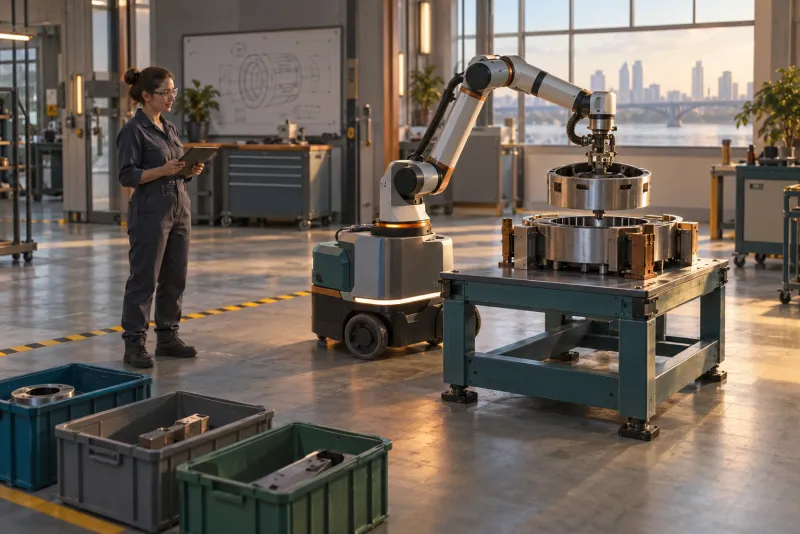
Scenario forecast (2028–2031): robots in warehouses, factories and labs may take on more multi-step operations, expanding first in jobs with controlled environments. Cost, safety and fault handling still limit adoption; a robot in every home is not the baseline scenario. Confidence in direction: medium to low. Year is a browsing anchor. Source · Forecast by e-acc.ai scenario (2026-10-08)
In The Singularity Is Nearer, Kurzweil reaffirms that AI will reach human-level intelligence by 2029. Source · Forecast by Ray Kurzweil

Scenario forecast (2029–2031): in some materials and life-science problems, AI may link hypotheses, experimental design and analysis, with automated equipment shortening iterations. Only reproducible experimental validation counts as a breakthrough, and it does not mean drugs will be approved right away. Confidence in direction: medium to low. Year is a browsing anchor. Source · Forecast by e-acc.ai scenario (2026-10-08)
Epoch AI estimates that training runs of about 2×10²⁹ floating-point operations will likely be feasible by 2030. Source · Forecast by Epoch AI
The International Energy Agency projects global data center electricity use of about 945 TWh in 2030, more than double the 2024 level. Source · Forecast by International Energy Agency (IEA)
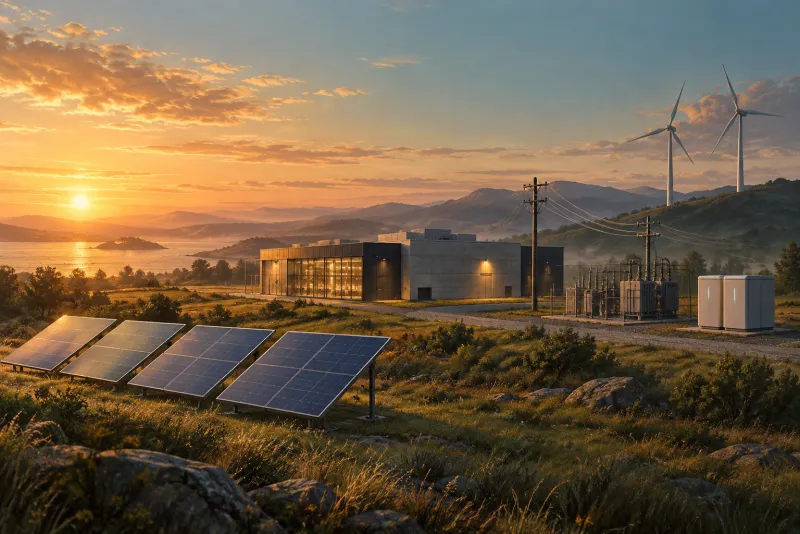
Scenario forecast (2028–2031): AI demand may drive coordinated expansion of data centers, power grids, energy storage and cooling. The IEA's 2030 electricity projection grounds the demand; the build-out pace in this scenario remains constrained by grid connection, financing and supply chains, and does not imply energy has become limitlessly cheap. Confidence in direction: fairly high on demand, medium on build-out pace. Year is a browsing anchor. Source · Forecast by e-acc.ai scenario (2026-10-08)
Each era illustrated in its own style.
Every timeline entry cites its source. Metrics interpolate logarithmically between sourced data points. Forecasts include institutional and community views, and attributed site scenarios; years are not guaranteed realization dates. Illustrations are AI-generated in each era's style.