
Kardashev index
0.645
Based on primary energy power · Type I = 1
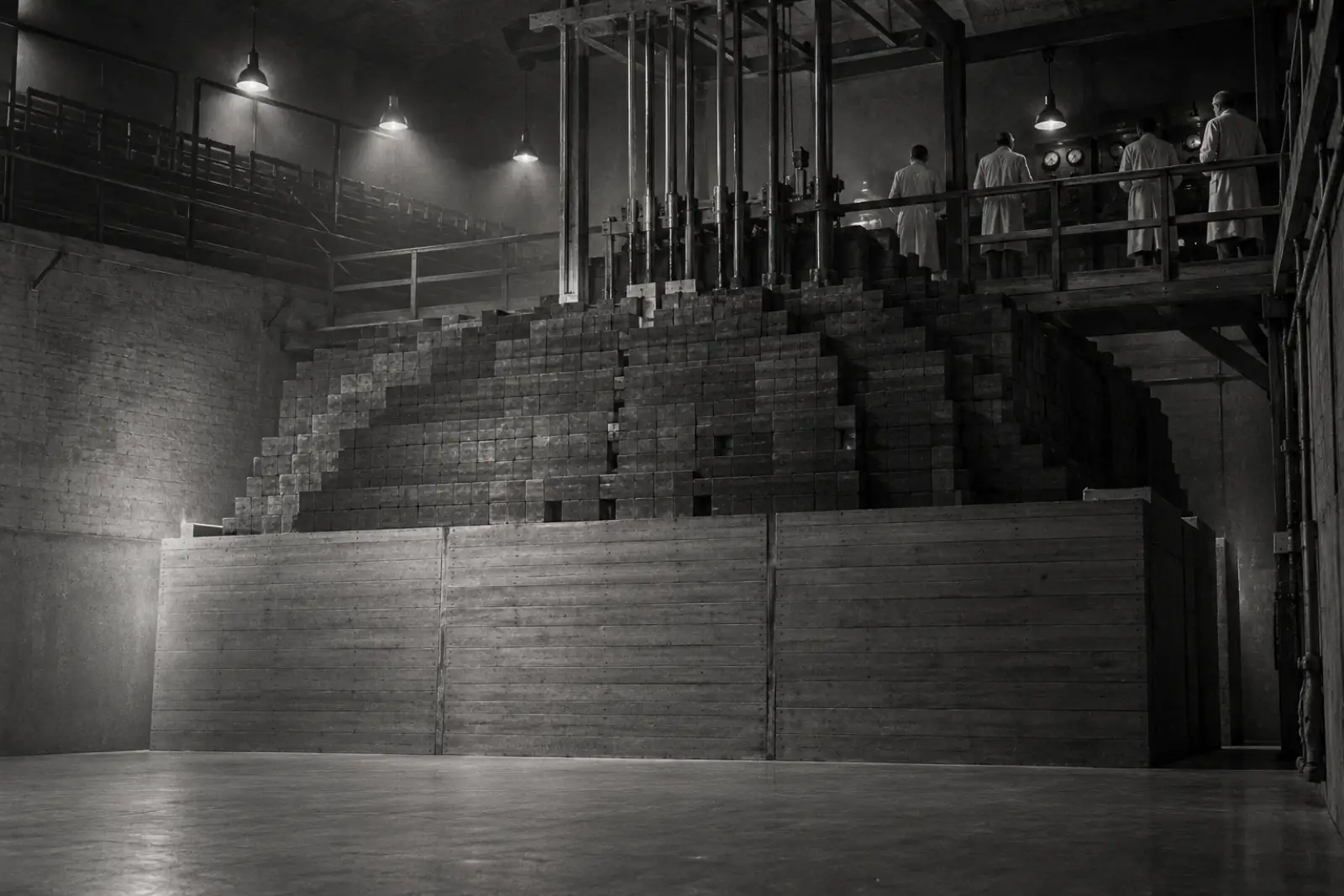
AccelerationFour-dimensional view84 years agoThe Atomic Age
Chicago Pile-1 achieves the first man-made self-sustaining chain reaction.
Art style · 1940s black-and-white news photography
Each sparkline shows the documented history of a metric on a logarithmic time axis. The dot marks the selected moment.
0.645
Based on primary energy power · Type I = 1
2.33Bpeople
1/4 of today
2.8×10¹²W
1/7 of today
—
No reliable data yet · data begins 1945
0.02 seconds
1 times faster than today
870km/h
1/46 of today
The eight closest milestones. Select a title to jump there.
Turing proposes a mathematical model of computability, laying the foundation of computer science. Source
Hahn and Strassmann discover that uranium nuclei can split. Source
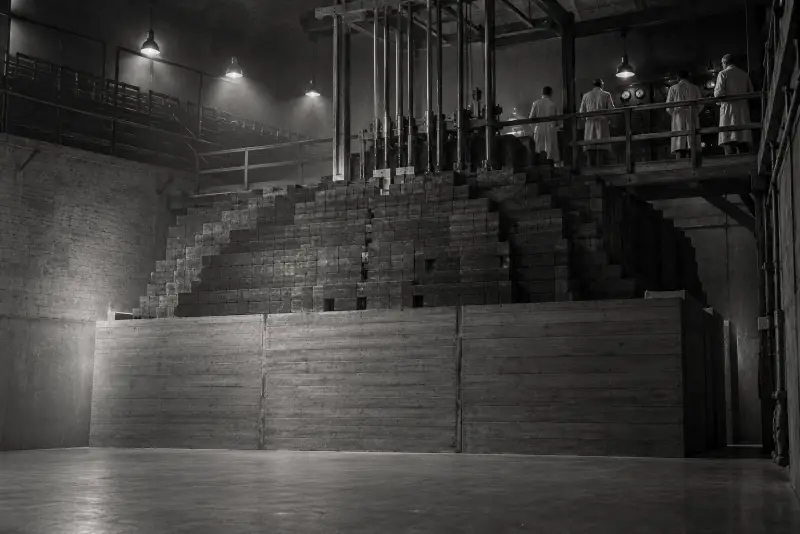
Chicago Pile-1 achieves the first man-made self-sustaining chain reaction. Source
The Trinity test detonates the first atomic bomb in New Mexico. Source
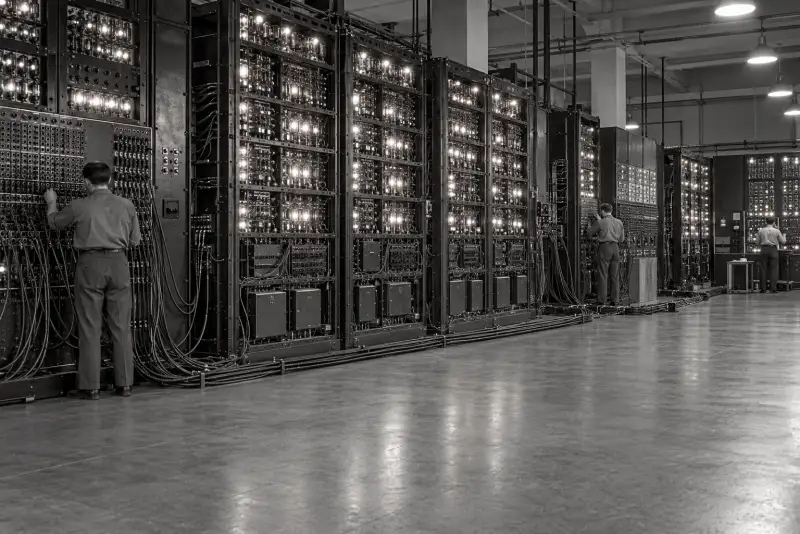
ENIAC, a general-purpose electronic computer, is publicly unveiled at the University of Pennsylvania. Source
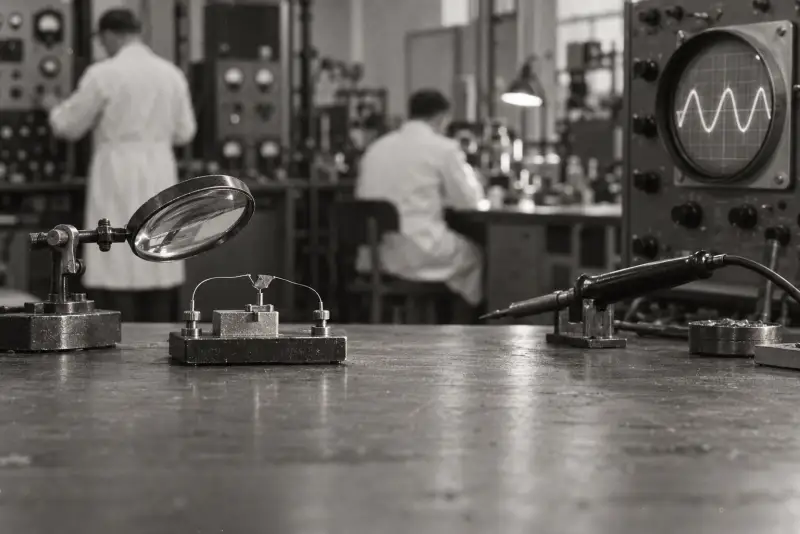
Bardeen and Brattain at Bell Labs build the point-contact transistor. Source
Shannon publishes "A Mathematical Theory of Communication": information becomes measurable. Source
Turing publishes "Computing Machinery and Intelligence", proposing the "imitation game". Source
Acquired40 / 121 items
Each era illustrated in its own style.
Every timeline entry cites its source. Metrics interpolate logarithmically between sourced data points. Forecasts include institutional and community views, and attributed site scenarios; years are not guaranteed realization dates. Illustrations are AI-generated in each era's style.