
Kardashev index
—
No reliable data yet
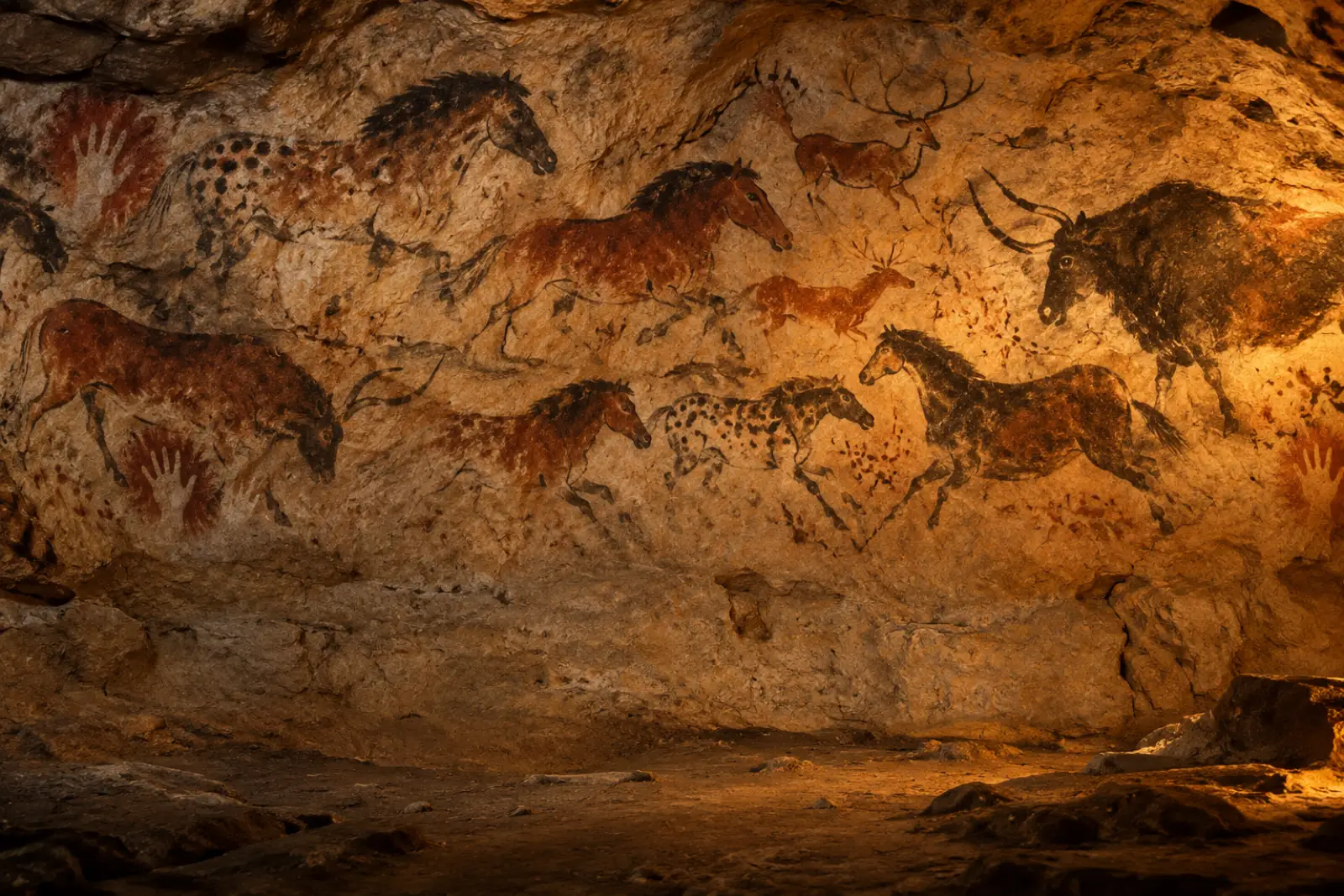
AccelerationFour-dimensional view60,000 years ago
Modern humans leave Africa and spread across every continent, leaving murals and symbolic objects; imagination and stories begin to pass down the generations.
Art style · Paleolithic cave painting
Each sparkline shows the documented history of a metric on a logarithmic time axis. The dot marks the selected moment.
—
No reliable data yet
—
No reliable data yet · data begins 12,000 years ago
—
No reliable data yet · data begins 12,000 years ago
—
No reliable data yet · data begins 1945
—
No reliable data yet · data begins 1620
32km/h
1/1,260 of today
The eight closest milestones. Select a title to jump there.
Early Homo sapiens fossils from Jebel Irhoud, Morocco, date to about 315,000 years ago. Source
About 70,000 to 50,000 years ago, modern humans spread from Africa across the world. Source
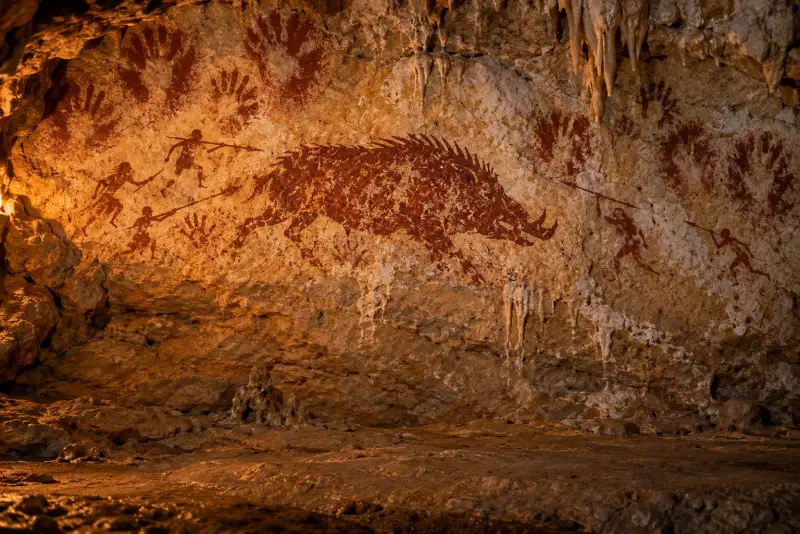
A cave scene of humans and a wild pig in Sulawesi is at least 51,200 years old. Source
France's Chauvet Cave holds a wealth of animal paintings, most dating to about 37,000 to 33,500 years ago. Source
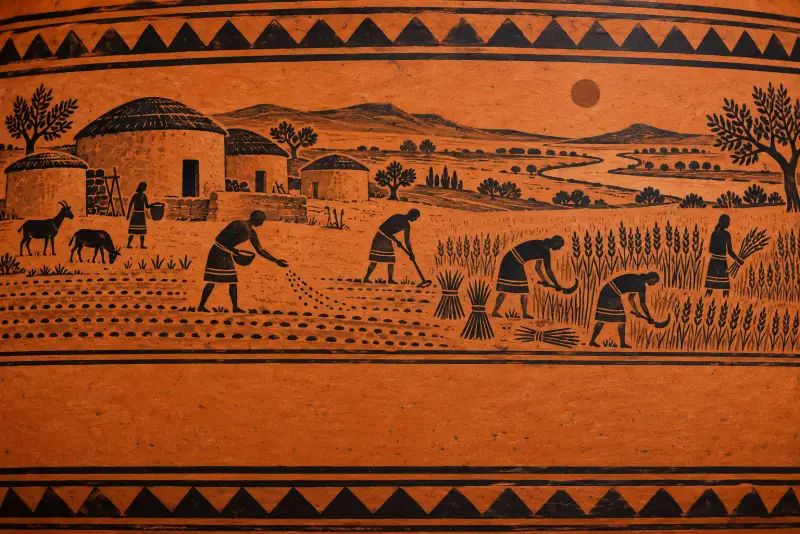
Crops were domesticated in the Fertile Crescent around 10,000 to 8000 BC, and people gradually settled down. Source
A megalithic complex in present-day Turkey, built around 9500 BC. Source
From about 7100 BC, a large Neolithic settlement grew up in Anatolia. Source
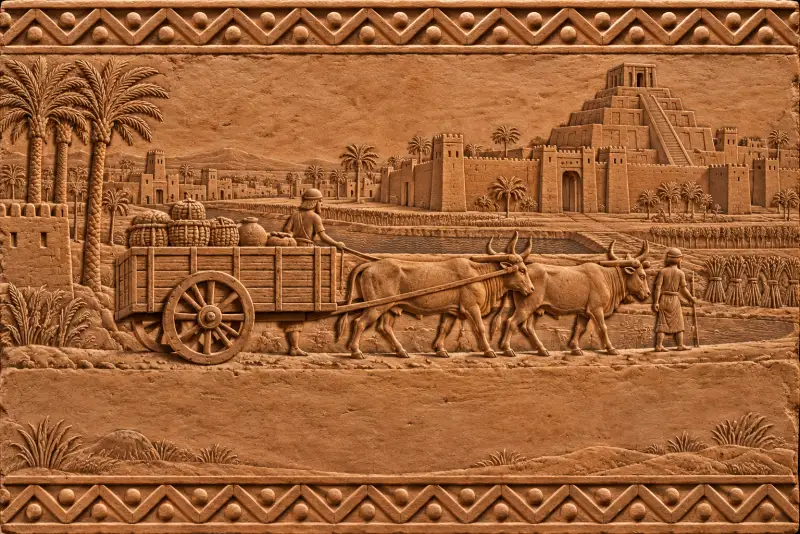
By around 3500 BC, wheels were recorded in use in Sumer. Source
Acquired2 / 121 items
Each era illustrated in its own style.
Every timeline entry cites its source. Metrics interpolate logarithmically between sourced data points. Forecasts include institutional and community views, and attributed site scenarios; years are not guaranteed realization dates. Illustrations are AI-generated in each era's style.