
Kardashev index
0.458
Based on primary energy power · Type I = 1
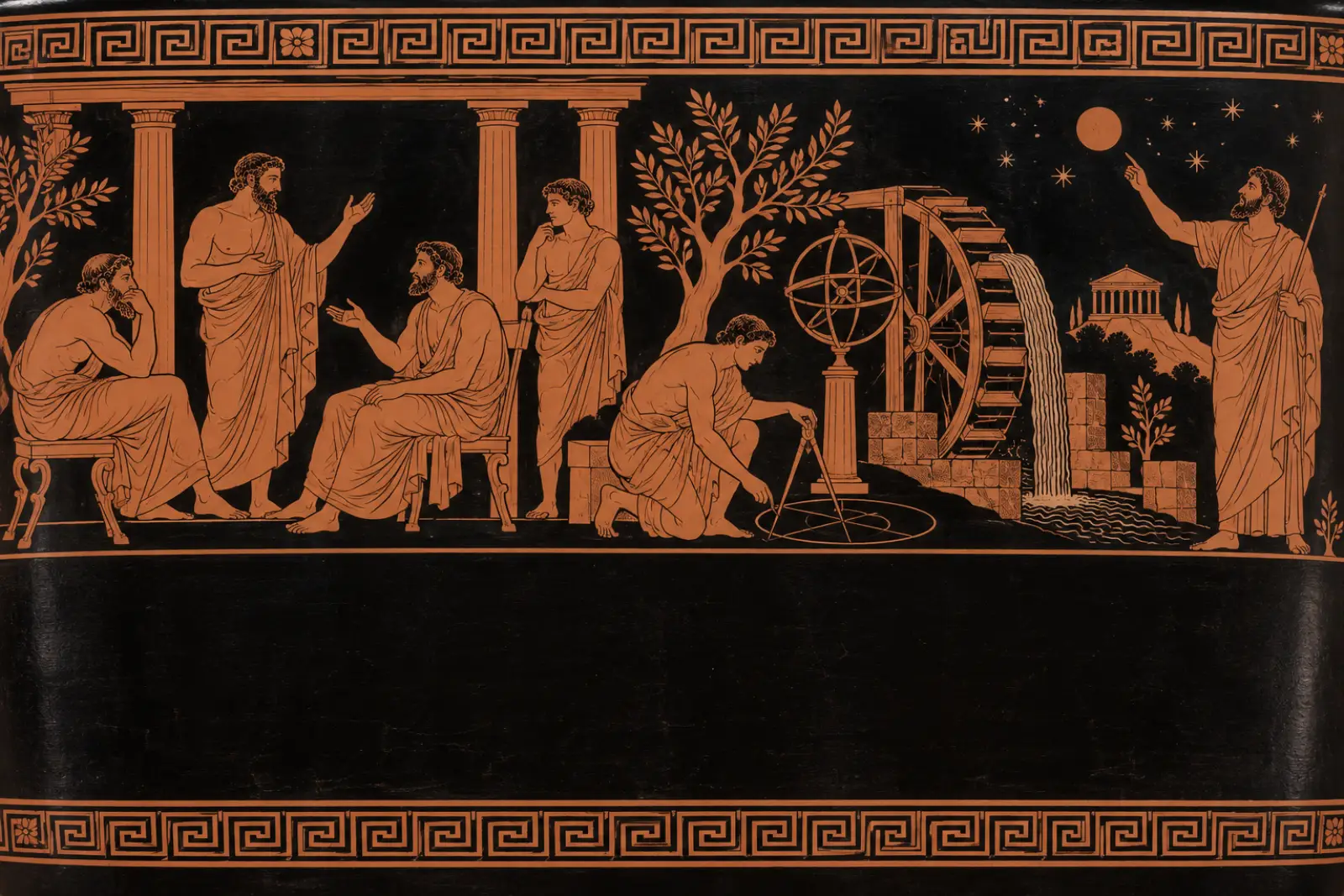
AccelerationFour-dimensional view2,826 years ago
Philosophy and science flourish in Greece, China, India and elsewhere, and geometry and law take shape, but power still comes from human, animal and water power.
Art style · Ancient Greek red-figure pottery
Each sparkline shows the documented history of a metric on a logarithmic time axis. The dot marks the selected moment.
0.458
Based on primary energy power · Type I = 1
128Mpeople
1/65 of today
3.8×10¹⁰W
1/538 of today
—
No reliable data yet · data begins 1945
—
No reliable data yet · data begins 1620
56km/h
1/718 of today
The eight closest milestones. Select a title to jump there.
A written Babylonian law code carved on a stone stele, around 1753 BC. Source
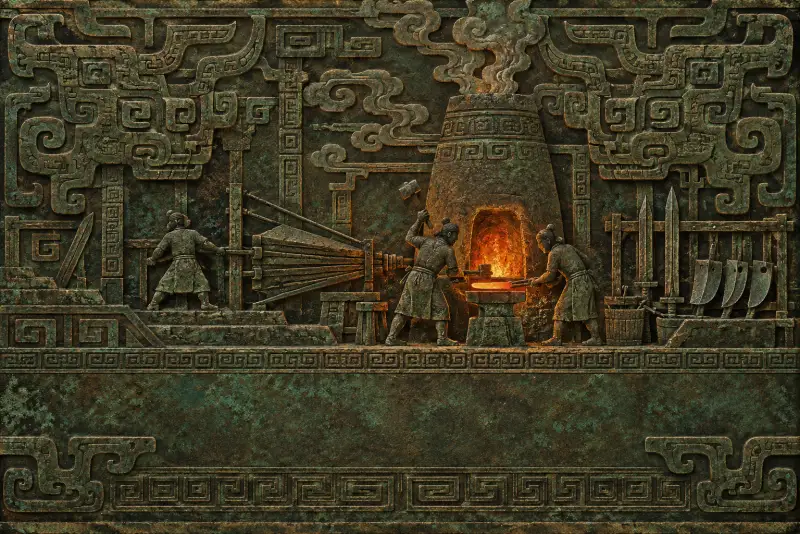
From around 1200 BC, ironworking spread and iron gradually replaced bronze. Source
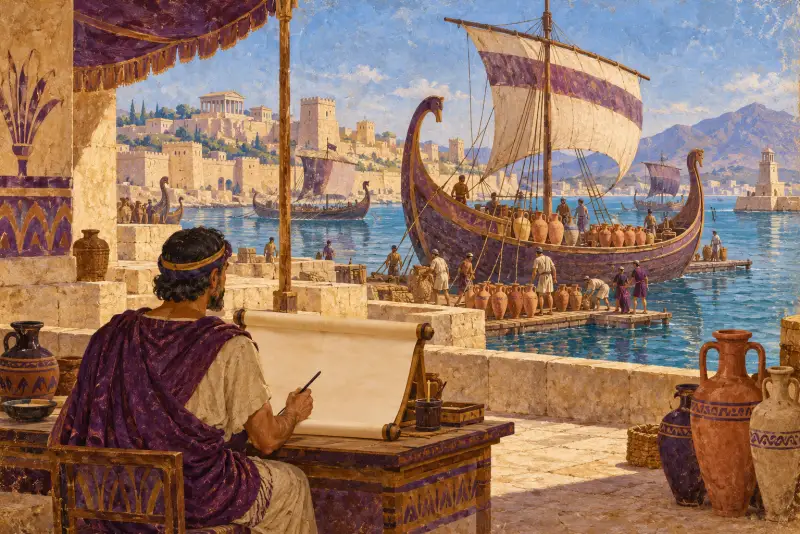
A handful of letters could record speech sounds; it later gave rise to the Greek, Latin and other alphabets. Source
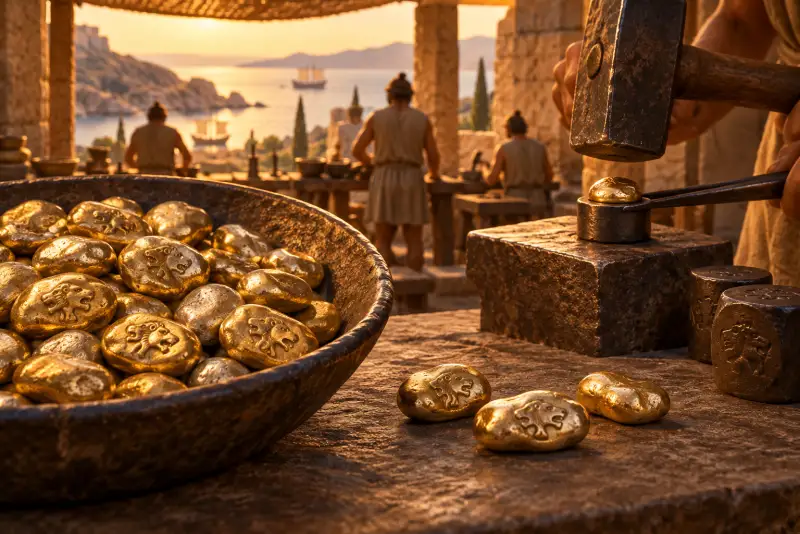
Around 600 BC, electrum coins appeared in Lydia, while China was already casting bronze spade money. Source
Euclid derived theorems from axioms, setting the model for deductive reasoning. Source
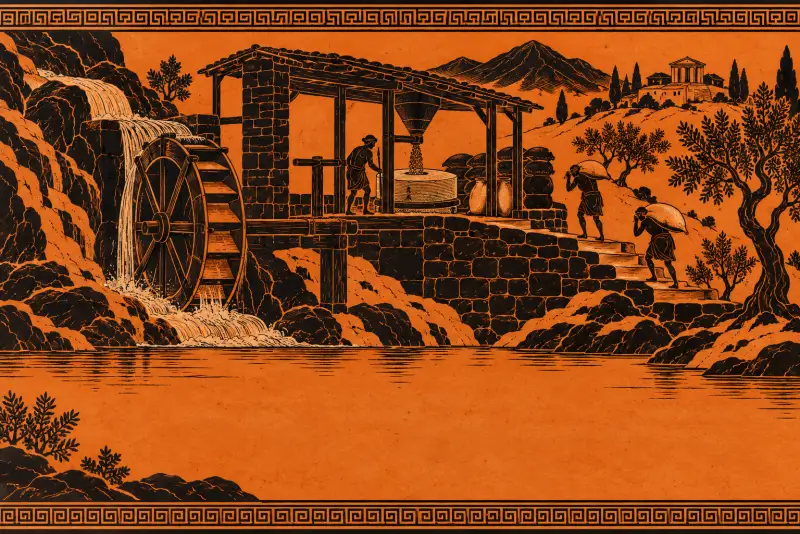
Water-driven wheels appear in the writings of the Greek engineer Philo, around the 3rd century BC. Source
A geared device from the 2nd century BC that predicted celestial events; it is the oldest known analog computer. Source

In the Eastern Han, Cai Lun improved papermaking using tree bark, hemp scraps and rags, making writing material cheap. Source
Acquired9 / 121 items
Each era illustrated in its own style.
Every timeline entry cites its source. Metrics interpolate logarithmically between sourced data points. Forecasts include institutional and community views, and attributed site scenarios; years are not guaranteed realization dates. Illustrations are AI-generated in each era's style.