
Kardashev index
0.730
Based on primary energy power · Type I = 1

AccelerationFour-dimensional view3 years ago
Function calling arrives in large-model APIs, letting models call external programs to look up information, run code and take actions, paving the way for agentic workflows.
Art style · Contemporary realistic technology illustration
Each sparkline shows the documented history of a metric on a logarithmic time axis. The dot marks the selected moment.
0.730
Based on primary energy power · Type I = 1
8.12Bpeople
Comparable to today
2×10¹³W
Comparable to today
5.9×10¹⁰floating-point operations per second per dollar (FLOP/s per $, nominal dollars)
1/1 of today
0.03 seconds
Comparable to today
39,897km/h
Comparable to today
The eight closest milestones. Select a title to jump there.
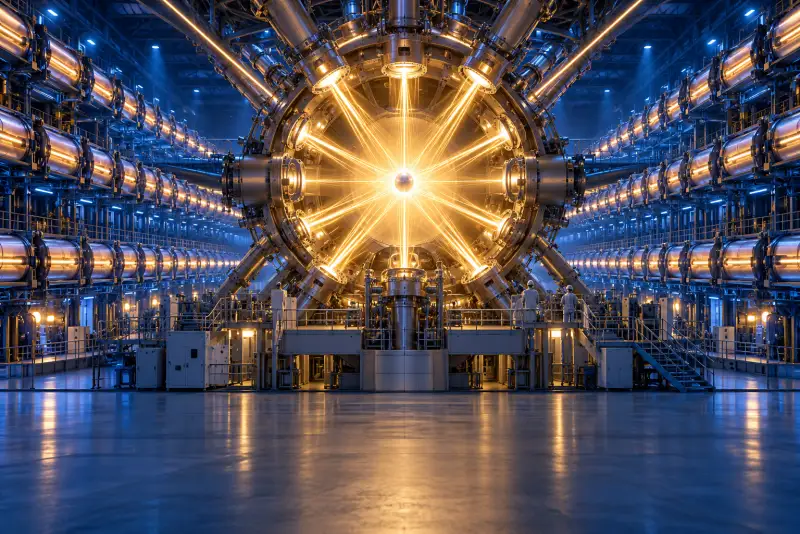
The US National Ignition Facility produces more fusion energy than the laser energy delivered, for the first time. Source
Meta releases LLaMA to researchers, sparking the open-weight model ecosystem. Source
A multimodal model with a leap in capability, priced at launch at $30 per million input tokens. Source
Anthropic releases Claude, initially with limited access for partners. Source
The largest rocket ever built launches as a full stack for the first time. Source
OpenAI introduces structured function calling, letting developers connect models to lookups, calculations and other software tools. Source
Marc Andreessen publishes a manifesto calling for technology and markets to accelerate progress. Source
The UK approves the CRISPR therapy Casgevy for sickle cell disease and thalassemia. Source
Acquired112 / 121 items
Each era illustrated in its own style.
Every timeline entry cites its source. Metrics interpolate logarithmically between sourced data points. Forecasts include institutional and community views, and attributed site scenarios; years are not guaranteed realization dates. Illustrations are AI-generated in each era's style.