
Kardashev index
0.521
Based on primary energy power · Type I = 1
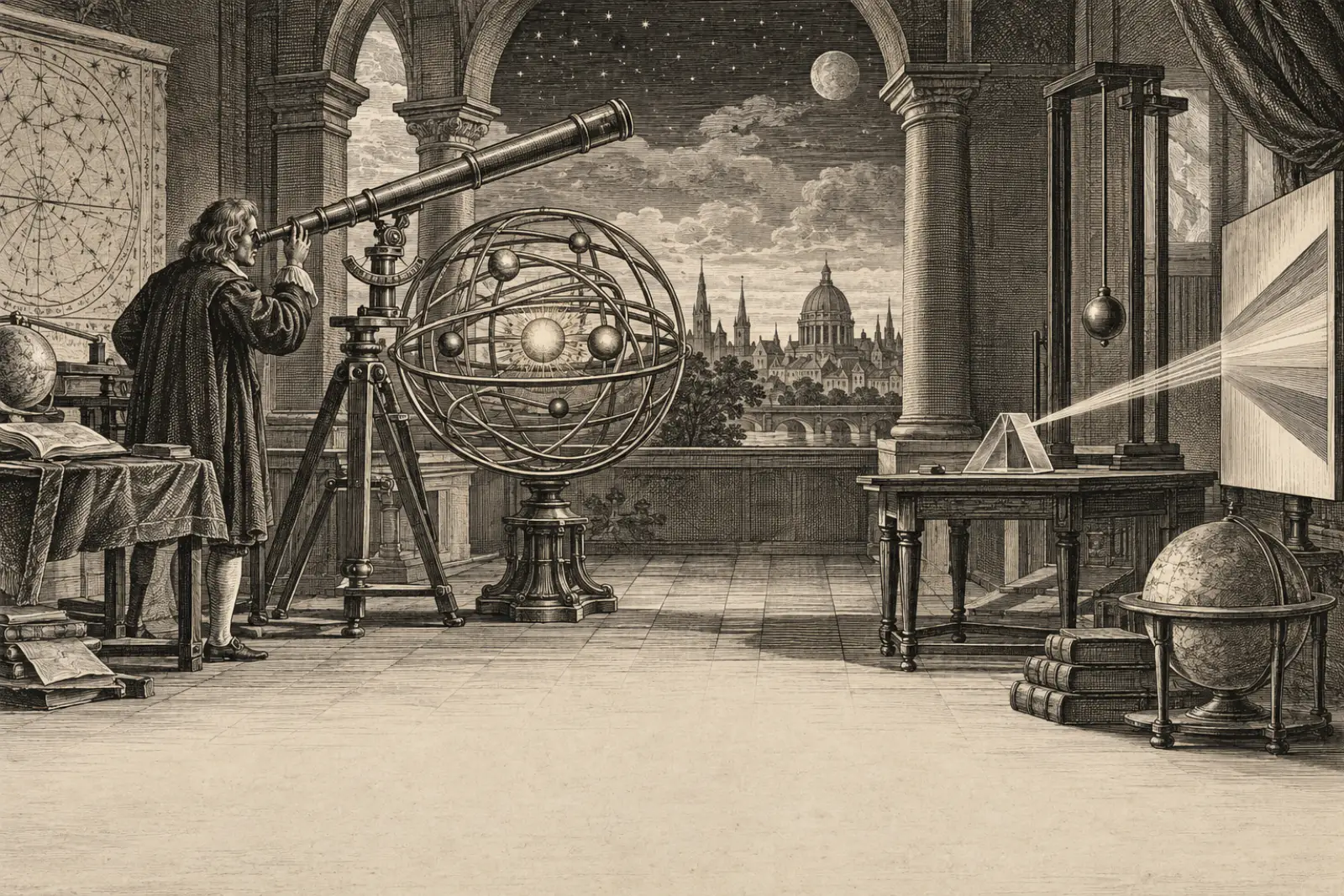
AccelerationFour-dimensional view484 years ago
Heliocentrism, the telescope and Newtonian mechanics establish the method of experiment plus mathematics, and nature becomes predictable.
Art style · Copperplate engraving
Each sparkline shows the documented history of a metric on a logarithmic time axis. The dot marks the selected moment.
0.521
Based on primary energy power · Type I = 1
509Mpeople
1/16 of today
1.6×10¹¹W
1/125 of today
—
No reliable data yet · data begins 1945
—
No reliable data yet · data begins 1620
63km/h
1/633 of today
The eight closest milestones. Select a title to jump there.
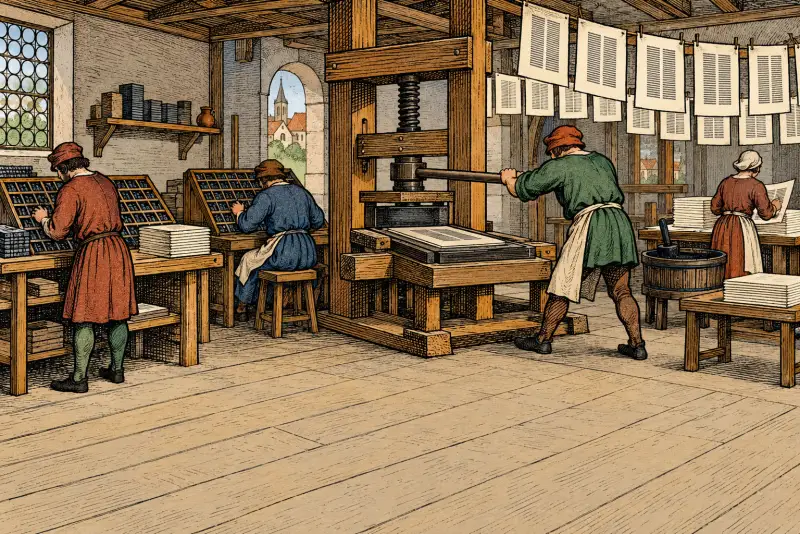
Around 1440, Gutenberg invented the printing press, and books began to be reproduced at scale. Source
A transatlantic route opened, beginning sustained contact between the Old World and the New. Source
The remnants of Magellan's fleet, led by Elcano, returned to Spain, completing the first voyage around the world. Source
Copernicus published On the Revolutions of the Heavenly Spheres, placing the Sun rather than Earth at the center. Source
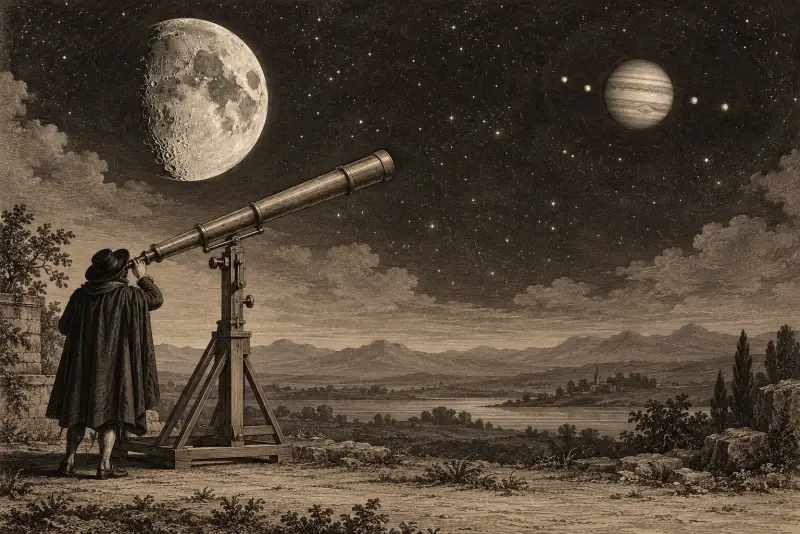
Sidereus Nuncius was published, recording mountains on the Moon and the moons of Jupiter. Source
Newton set out the laws of motion and universal gravitation, describing heaven and Earth with the same mathematics. Source
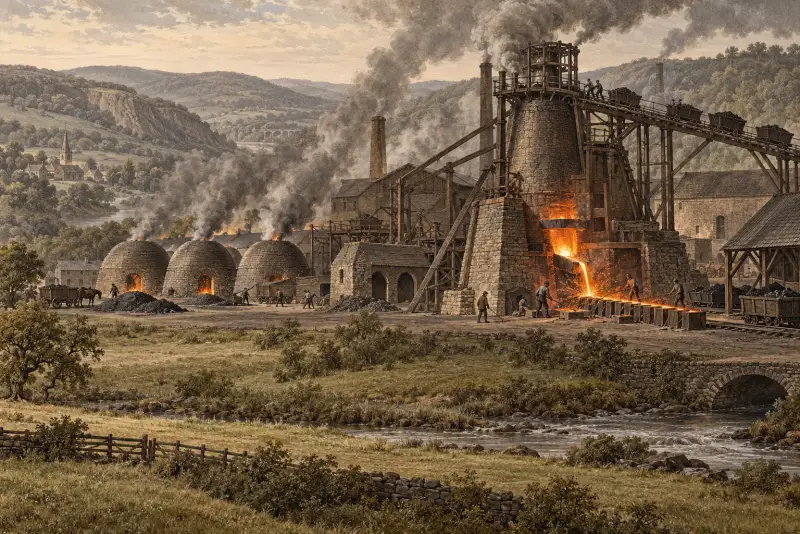
Abraham Darby smelted iron in a coke-fired blast furnace, and coal began to replace charcoal. Source
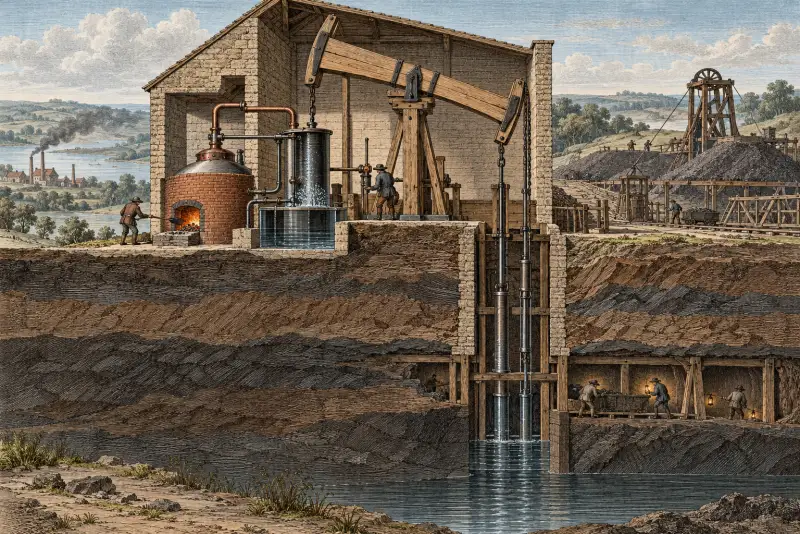
The first practical steam engine, used to pump water from mines. Source
Acquired17 / 121 items
Each era illustrated in its own style.
Every timeline entry cites its source. Metrics interpolate logarithmically between sourced data points. Forecasts include institutional and community views, and attributed site scenarios; years are not guaranteed realization dates. Illustrations are AI-generated in each era's style.